All about the fide test
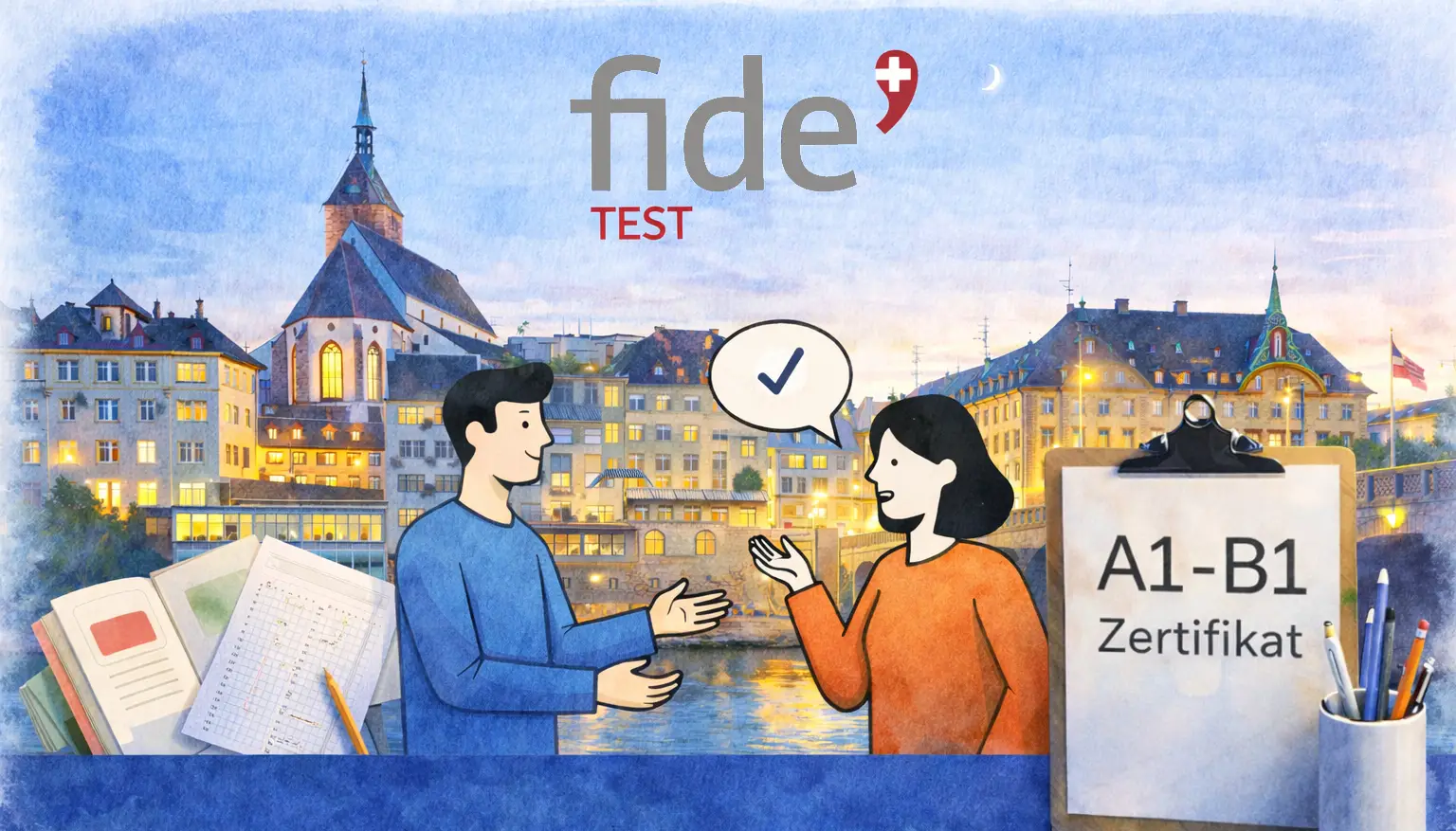
In short: The fide test is an official language test in Switzerland that certifies your German language skills for residence permits or naturalization. The test covers levels A1 to B1 and assesses speaking, listening, reading, and writing. With targeted preparation through private lessons or crash courses, you can successfully pass the test.
What is a FIDE test?
The FIDE test is a standardized language test that assesses your knowledge of one of Switzerland's national languages. The test was developed specifically for immigrants and is based on the Common European Framework of Reference for Languages. You can choose between different language levels depending on the level you need for your personal or professional goals. The FIDE test is recognized throughout Switzerland and is considered official proof of your language proficiency.
What does FIDE stand for?
FIDE stands for "Français, Italiano, Deutsch in der Schweiz" (French, Italian, German in Switzerland), and "Evaluation" was added later. The system was developed to promote linguistic integration in Switzerland. It is not just about passing an exam, but about being able to communicate in everyday life and participate in social life.
How does the FIDE test work?
The fide test consists of four parts: listening, reading, speaking, and writing. The requirements vary depending on the language level. The oral exam usually takes place as an individual interview or in pairs, while the written parts are completed in a group. The exam lasts a total of about two to three hours. You will be given realistic tasks that reflect typical everyday situations in Switzerland, such as conversations with a doctor, job applications, or visits to government offices.
What is included in the B1 test?
At the B1 level, you must demonstrate that you understand the main points when clear standard language is used. In the listening comprehension section, you can expect dialogues and short texts on familiar topics. In reading, you will analyze texts such as newspaper articles or information brochures. In the writing section, you will compose personal texts such as letters or emails. The oral exam requires you to report on experiences, express opinions, and respond to unexpected situations. The B1 level is often the minimum requirement for a residence permit.

How do you prepare for the FIDE test?
A good FIDE test preparation begins with an honest assessment of your current language level. For beginners at A1 level, it is advisable to practice regularly and build up your basic vocabulary. Watch German films with subtitles, listen to Swiss radio, and speak German as often as possible in everyday life.
At A2 level, you should already be able to hold simple conversations. It helps to work specifically on your grammar and expand your vocabulary. Read simple texts and write short notes or messages in German.
For the B1 level, you need structured preparation. This is where private lessons come in, as they address your individual weaknesses. An experienced teacher can show you where you still have gaps in your knowledge and how to fill them. Many participants also benefit from crash courses, which provide intensive preparation for the exam and cover all relevant topics in a single day.
Also, practice with real exam formats. Familiarize yourself with the structure and simulate exam situations. Time management is important, so practice under realistic conditions.
How we can assist you with ILS exams
ILS Exams is an official testing center for the fide test Switzerland. Not only can you take the exam with us, but we can also help you prepare for it in the best possible way. We offer customized private lessons in which our experienced teachers focus specifically on your needs. If you don't have much time, our one-day fide test crash courses are the perfect solution. In small groups, we go through all the topics relevant to the exam and give you practical tips for exam day.